Biography

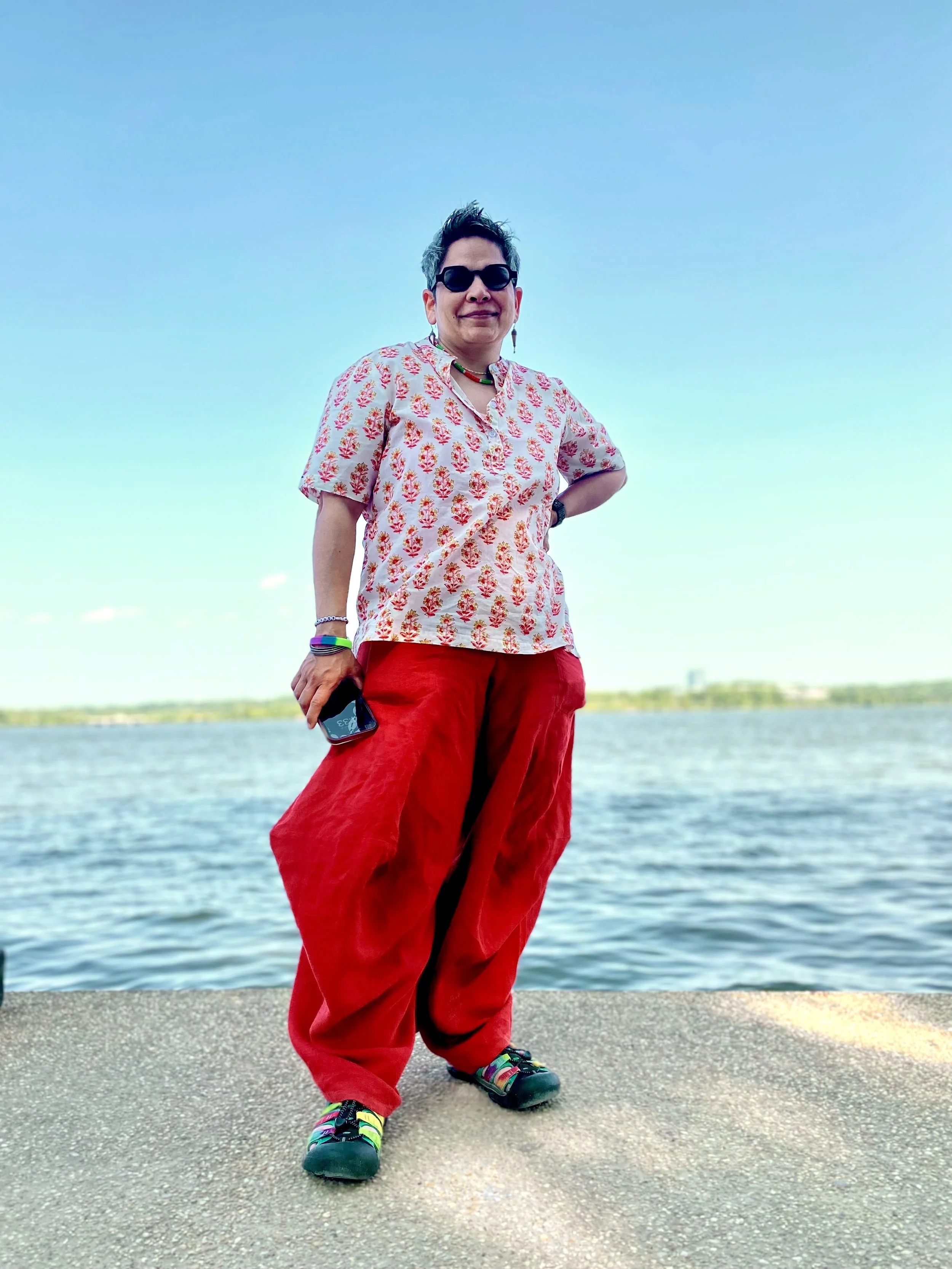
Photograph by Lesley Kingston

Sonali Gulati is an independent filmmaker, a feminist, a queer rights activist, and an educator. She teaches film at Virginia Commonwealth University's School of the Arts in the department of Photography & Film. She has an MFA in Film & Media Arts from Temple University and a BA in Critical Social Thought from Mount Holyoke College. Gulati grew up in New Delhi and has made several films that have screened at over five hundred film festivals worldwide. 

Her films have screened at venues such as the Hirshhorn Museum, the Museum of Fine Arts in Boston, the National Museum of Women in the Arts, and at film festivals such as the Margaret Mead Film Festival, the Black Maria Film Festival, Slamdance Film Festival, and BlackStar Film Festival. Gulati’s award-winning documentary film I Am was broadcasted on public television and cable TV in the U.S. and Portugal. Her documentary film Nalini by Day, Nancy by Night, was broadcast on television in the U.S., Canada, Europe, Australia, New Zealand, South Asia, and North Africa.  

Gulati is a Guggenheim Fellow and has received support for her work from the Creative Capital Foundation, Center for Asian American Media (CAAM), Third Wave Foundation, Tribeca All Access, and World Studio Foundation. She’s also won awards and recognition from the Robert Giard Memorial Fellowship, the Virginia Museum of Fine Arts Fellowship, the Theresa Pollak Prize for Excellence in the Arts, and VCU School of the Arts Faculty Award of Excellence.

Gulati is passionate about social justice issues and her artistic practice is bound by a deep commitment towards decolonization, decarceration, demilitarization, and abolition. Her research interests include personal storytelling, counter-histories, South Asian diasporic and queer identities.
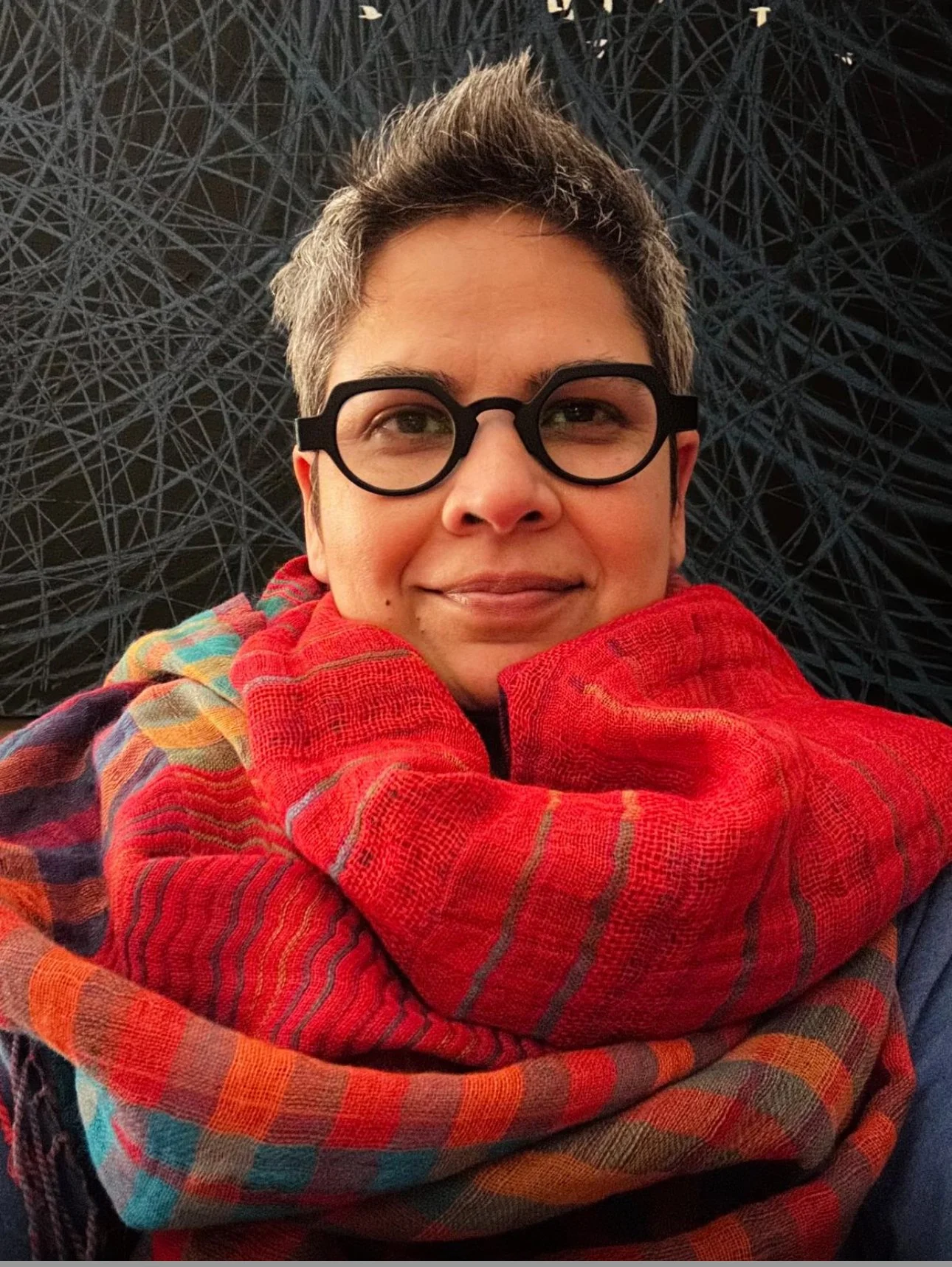
Photograph by A. Rizwan

artist statement

As a Queer South Asian living in the United States, I am deeply interested in the politics of “radical representation” that extends beyong “symbolic representation”.

I want to make films that create not just a stronger presence for diverse, under-represented, and silenced voices, but radical ones. My work fuses art and politics from a place of passion for activism and a determined drive for social and political change. Through personal storytelling, my films touch upon a variety of subjects from critiquing orientalism and global capitalism to queer acceptance and trans joy.

I often ask myself: Why this film? Or more importantly: Why am I making this film? As a result, my work is driven by deeply personal motivations that question the connections between myself as an individual and my role as a filmmaker, one who is simultaneously resisting against the capitalist, imperialist world we live in.

My views are shaped through a decolonial, diasporic, and feminist lens. I am interested in issues of identity, in exploring not just neatly defined categories of race, class, caste, religion, gender, and sexuality but more the intersections, overlaps, and spaces in between these categories.

Since I’m interested in these intersectionalities, I often question, push, and transgress boundaries of genre by mixing traditional “documentary” with “fictional narratives” or even making the “fictional” aspect of “documentary” storytelling more transparent. I recognize the power of storytelling and storytellers, and the necessity in making films ethically and responsibly. I don’t view people in my films as “documentary subjects” but as co-conspirators and collaborators who have agency in representing themselves and in shaping the films that we co-create.

As a filmmaker and as an educator, I reject and transgress from Americentric and Eurocentric notions of “traditional” or “conventional” ways of filmmaking. Instead my films and my teaching are an innovative concoction, influenced by experimental filmmaking and “alternative” perspectives by artists from the Global South. My goal is to not only find new and refreshing ways of storytelling, but also to create eye-opening films to raise awareness, build community, and ultimately make this a safe, sustainable, and just world.

Sonali Gulati

Professor
VCU School of the Arts
Department of Photography & Film
P.O.Box 843088
Richmond, VA-23284-3088

tel. 631.245.1747
email: sgulati@vcu.edu